Classified Waters and Biotoxin Monitoring
Oysters concentrate microscopic particles from the water column, which makes water classification the first barrier of food safety. Under European Union food hygiene rules (Regulation (EC) No 853/2004) and comparable frameworks such as the Codex Alimentarius Code of Practice for Fish and Fishery Products, marine authorities sample shellfish flesh—not merely seawater—for faecal indicator bacteria (Escherichia coli), marine biotoxins produced by harmful algal blooms, and heavy metals.
Class A areas meet microbiological thresholds for direct human consumption after routine grading and washing. Class B waters require mandatory purification (depuration) or relaying in clean marine beds before entering the raw market, while Class C zones cannot be sold raw and require prolonged relaying or commercial heat treatment. Temporary harvest closures immediately take effect whenever storm runoff spikes bacterial counts or phytoplankton monitoring detects toxin-producing dinoflagellates.
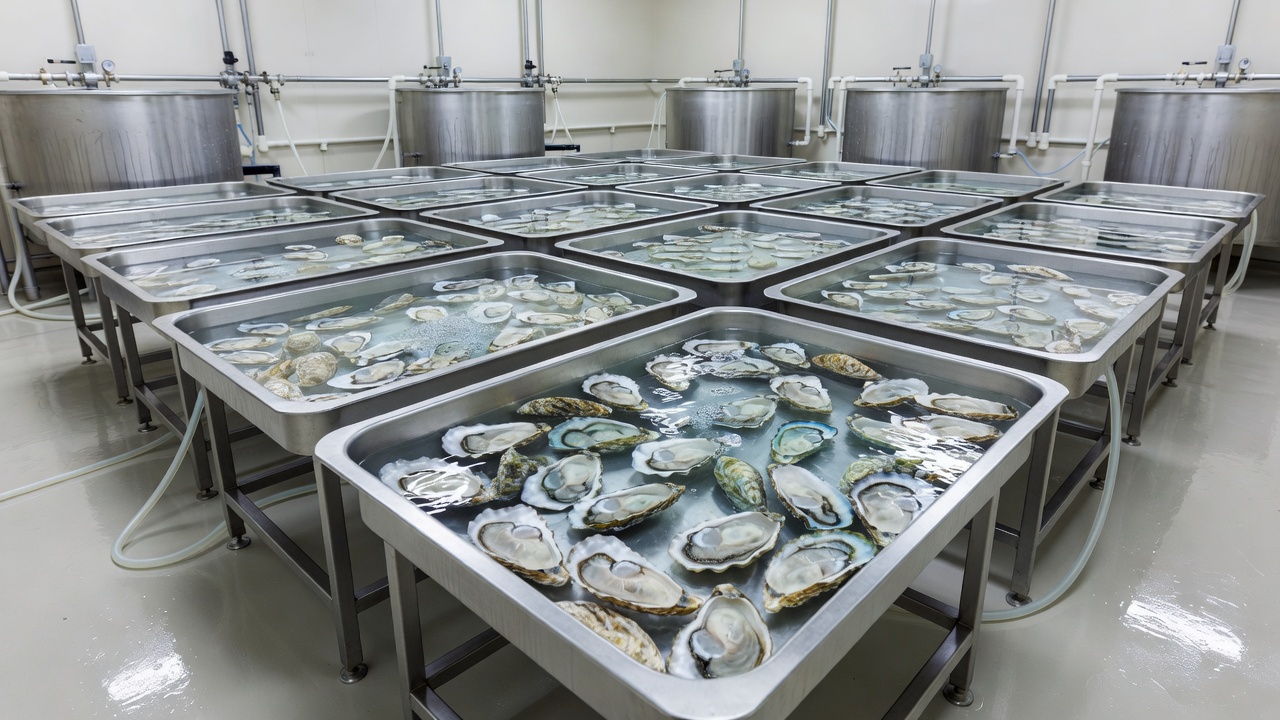
How Depuration and Wet Storage Work
Inside a coastal dispatch centre, harvested oysters are washed free of exterior mud and placed in shallow, perforated crates stacked inside oxygenated seawater basins. Filtered seawater passes continuously past ultraviolet (UV) lamps or controlled ozone units to neutralize bacteria without leaving chemical residues. Over 24 to 48 hours of active pumping, the oysters expel grit and transient microbes through natural filtration.
Importantly, depuration targets bacterial loads rather than marine biotoxins or hardy viral particles such as norovirus—which is why source water classification and sewage-outfall prevention remain irreplaceable. Wet storage, by contrast, holds already-clean Class A stock in chilled seawater tanks purely to buffer tidal schedules or build up shipping volume prior to airfreight.
Temperature Control Against Vibrio
Naturally occurring marine bacteria such as Vibrio parahaemolyticus and Vibrio vulnificus thrive when coastal water temperatures climb above 15°C to 20°C. Food-safety agencies require rapid post-harvest cooling—typically bringing internal oyster flesh down below 7°C to 10°C within strict time-to-temperature windows depending on season, and holding transit temperatures steadily between 1°C and 4°C.
Oysters must never sit submerged in melted freshwater ice inside a closed box; melting ice drowns live saltwater bivalves and causes premature gape. Instead, dispatch boxes pack oysters tightly—deep cupped shell down to preserve internal liquor—under moistened food-grade burlap or parchment, separated from gel packs or drained perforated trays.
Receiving Checks in the Restaurant Kitchen
A thorough receiving inspection takes less than three minutes per crate and protects guests, staff, and the grower’s reputation:
- Verify the Shellstock Tag: Confirm that the waterproof dispatch tag lists the harvester or dispatch centre approval number, production area, species scientific name, harvest date, and packaging date.
- Check Core Box Temperature: Probe between middle-layer shells (without piercing oysters) to confirm arrival at 4°C or colder, especially on warm-weather deliveries.
- Smell and Shell Response: Open boxes should smell mildly of fresh brine and seaweed. Discard cracked shells or gaping oysters that fail to close when lightly tapped.
- Rotate Cupped-Side Down: Store crates in dedicated bottom-shelf seafood refrigeration under damp clean cloth, cupped side down, never tightly sealed in airtight plastic bags where oysters suffocate.
- Retain Tags for Traceability: Keep harvest tags on file in chronological order for at least 60 to 90 days in line with local public-health regulations so every plate can be traced back to a single harvest lot.
Honest Risk Communication for Diners
Responsible hospitality does not conceal biological realities. Even well-managed raw shellfish carries elevated risk for people with compromised immune systems, liver conditions, haemochromatosis, or pregnancy. Plainly worded menu advisories noting that raw molluscs may pose risks to vulnerable individuals—paired with thoughtfully prepared steamed, grilled, or poached oyster dishes—reflect genuine care for the guest rather than defensive legalese.