Why Salinity Mirrors the Bay Directly
Unlike finfish that actively regulate internal blood salt levels, oysters are osmoconformers. When surrounding estuarine water rises or falls in salinity—measured in practical salinity units (PSU), where open ocean sits near 35 PSU and brackish river mouths drop below 20 PSU—the oyster’s tissue fluids adjust through free amino acids such as glycine, alanine, and taurine to balance osmotic pressure.
Observed fact: Within days of heavy coastal rainfall flushing fresh river water into an estuary, oysters from that bay contain measurably lower internal sodium chloride and taste noticeably milder. Conversely, during dry summer months or in high-evaporation coastal lagoons like Coffin Bay in South Australia, salinity climbs and oysters concentrate both mineral salts and sweet amino acids, producing a firmer bite and lingering finish.
Five Key Edible Species on Global Menus
Hospitality lists often foreground place names while leaving the species in tiny print. Understanding the five major cultivated species clarifies what is structural genetics versus what is habitat:
| Species | Shell Anatomy | Typical Growth Time | Common Tasting Notes |
|---|---|---|---|
| Pacific Cupped Crassostrea / Magallana gigas |
Deeply fluted, ruffled shell edge; pronounced dark purple or cream rays. | 18–30 months | Crisp brine opening to cucumber, melon rind, or creamy finish depending on plankton density. |
| European Flat Ostrea edulis |
Circular, flattened saucer shape; smooth lamellar layers, olive-grey hue. | 36–60 months | Bold iodine, hazelnut, savoury broth, and lasting metallic copper sensation. |
| Kumamoto Crassostrea sikamea |
Compact, deeply sculpted bowl; tight fluted ridges, small size. | 24–36 months | Low brine, high sweetness, honeydew melon aroma, clean velvety texture. |
| Eastern Oyster Crassostrea virginica |
Elongated, teardrop profile; smooth dense grey-white shell with dark muscle scar. | 24–42 months | Sharp, clean salinity in northern cold bays; buttery umami in warmer tidal creeks. |
| Sydney Rock Saccostrea glomerata |
Thick, irregular dark-violet shell; tightly interlocking scalloped margin. | 30–42 months | Concentrated mineral richness, lingering sweet-savoury depth, slow melt. |
Cold-Water Metabolism and Glycogen Reserves
Water temperature sets the pace of everything inside the shell. In cold northern waters such as Denmark’s Limfjord, Ireland’s Galway Bay, or Hokkaido’s Akkeshi Bay, seasonal plankton blooms occur over shorter windows and metabolic burn slows dramatically in winter. Before winter dormancy, oysters convert algal starches into glycogen—a natural energy reserve stored in the plump mantle and belly.
Tasting language: High glycogen levels translate on the palate as rich creaminess and natural sweetness that softens sharp sea salt. This biological rhythm explains why late-autumn and winter oysters from cold temperate coasts are widely regarded as fuller and sweeter than post-spawn specimens harvested immediately after warm late-summer tides.
Microalgae, Mineral Substrate, and the Limits of "Merroir"
As Rowan Jacobsen documented in A Geography of Oysters and M.F.K. Fisher observed earlier in Consider the Oyster, coastal geography shapes eating character through currents and bottom composition. Bays lined with granite cobble or clean sand carry different suspended diatoms and trace minerals than tidal flats bordering peat bogs or chalk cliffs. When an oyster filters fifty to one hundred litres of seawater per day, trace volatile compounds from marine algae accumulate temporarily in its digestive gland and mantle.
At the same time, careful tasters remain cautious of overly rigid flavour stereotypes. A farm in Willapa Bay, Washington, can produce two noticeably different flavour profiles within five hundred metres depending on whether baskets sit over eelgrass beds or near a freshwater slough. Likewise, heavy storms, dredging, or algal shifts can alter a bay’s profile from month to month. Rather than treating regional origin as an unchanging brand label, observant restaurants taste incoming lots upon delivery and describe what is actually on ice that evening.
How Shell Diagnostics Guide Kitchen Selection
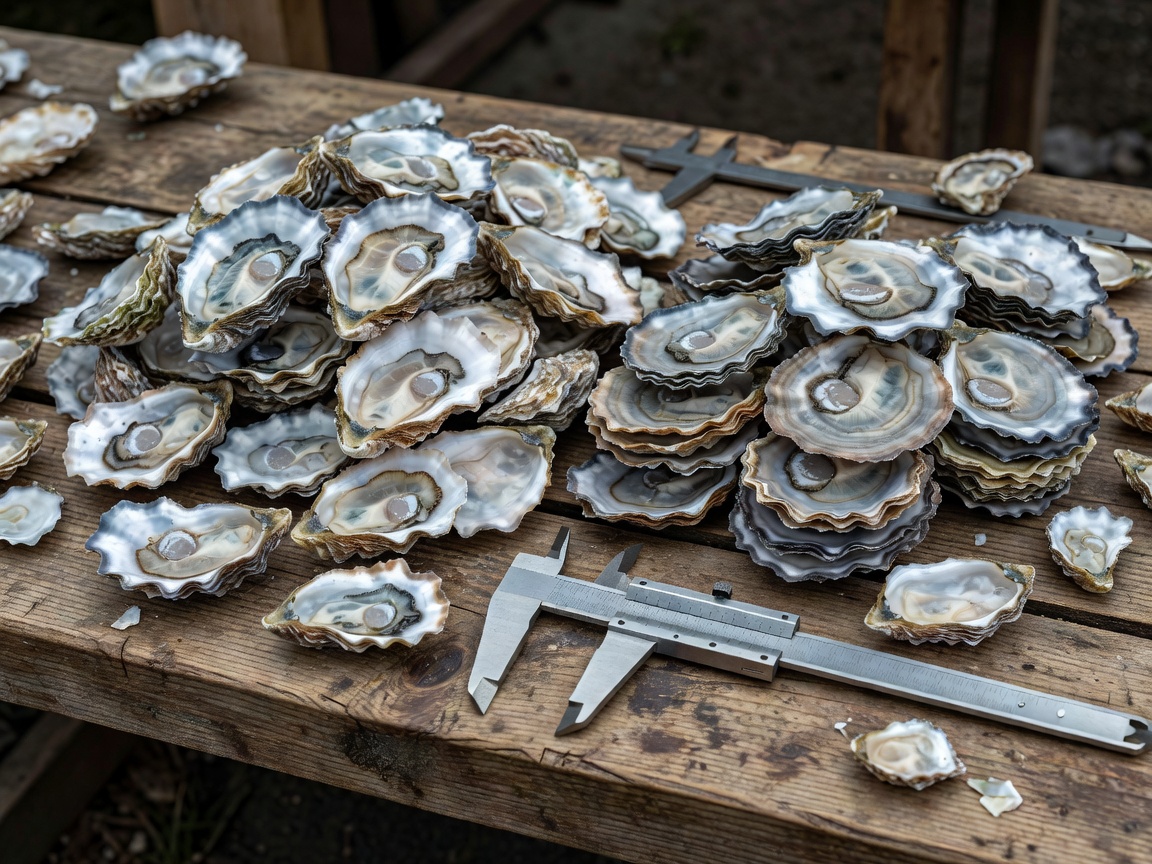
When chefs inspect a crate before service, external clues reveal how the waters treated the oyster. Thin, brittle edges suggest rapid warm-water growth or inadequate wave tumbling; dense, stacked growth rings reflect slow winter maturation and strong adductor attachment. Heavy, solid-feeling oysters relative to their length almost always hold intact liquor and generous meat fill, whereas light, hollow-sounding shells indicate drying or spawning depletion.